
Treat sewage inside the building or surfacing outdoors as urgent. Reduce water use, keep people and pets away from wastewater, and arrange an assessment. Routine pumping may be part of the solution when solids have accumulated, but diagnosis matters because pumping cannot repair a clogged pipe, electrical fault, damaged tank, or failed drainfield.
Quick Symptom List
The U.S. Environmental Protection Agency lists slow fixtures, plumbing gurgles, indoor backup, standing water or damp ground, sewage odors, and bright green or spongy grass over the tank or drainfield among common signs of a failing septic system. Look at the pattern, timing, and location rather than relying on one symptom.
Several fixtures drain slowly. A shared restriction or septic-system problem becomes more likely when toilets, tubs, and sinks are affected together.
Drains or toilets gurgle. Air moving through restricted plumbing can create bubbling or gurgling sounds.
Sewage backs up. Wastewater returning through a low drain, shower, tub, or toilet needs prompt attention.
Odors appear indoors or outside. The source may be a dry trap, blocked vent, loose lid, leak, or drainfield problem.
The septic area becomes wet or spongy. Surfacing wastewater or persistent dampness in dry weather can indicate poor treatment or dispersal.
Grass becomes unusually lush. A bright green strip or patch over components may reflect excess moisture and nutrients.
Whole-House vs Single-Drain Symptoms
One slow sink usually points first to a local fixture trap or branch drain. When several fixtures slow down at the same time, especially on the lowest level, the restriction may be in the building sewer or farther downstream in the septic system. The distinction is useful, but it is not a complete diagnosis.
| Observed pattern | More likely starting point | Next practical step |
| One sink or tub is slow | Fixture trap or nearby branch drain | Stop using chemical opener and check the local drain. |
| Several fixtures are slow | Main line, tank inlet, or septic system | Limit water use and arrange inspection. |
| Lowest drain backs up | Downstream restriction or overloaded system | Stop wastewater use and seek prompt help. |
| Alarm sounds on a pump system | High-water level, pump, float, or control issue | Reduce use; do not silence and ignore the alarm. |
Odors and Gurgling
A sewage odor is a warning, but it does not identify the cause by itself. Inside, check whether the smell is limited to one little-used fixture; water in a dry trap may have evaporated. Outside, note whether the odor is near a tank lid, plumbing vent, pump chamber, or drainfield. The EPA also notes that roof vents can clog or freeze during prolonged cold weather, allowing odors to appear inside or outside.
Gurgling commonly means air is being displaced through restricted plumbing. Note which fixtures make the sound and what was used immediately before it began. A toilet that gurgles when a washing machine drains suggests a shared downstream issue more strongly than an isolated sink noise. Avoid repeated flushing to test the problem; each test sends more water toward a system that may already be struggling.
Backup and Surfacing Wastewater
A sewage backup or wastewater on the ground is more serious than an occasional odor. Stop showers, laundry, dishwashing, and unnecessary flushing. Keep children and pets away from the affected area. Avoid direct contact with wastewater, and do not drive over wet soil near the tank or drainfield. Excess weight can compact soil or damage buried components.
Do not open a questionable lid, lean over an access opening, or enter a septic tank. Tanks can contain toxic gases and low oxygen, and deteriorated lids may collapse without warning. A trained provider can identify safe access, check the tank level, assess accessible components, and determine whether pumping, line clearing, pump work, or further drainfield evaluation is appropriate.
Full Tank vs Line or Drainfield Problem
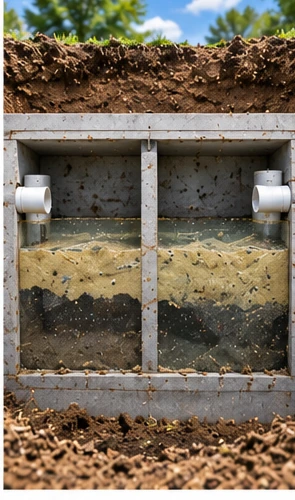
A septic tank normally contains liquid up to its working level, so seeing liquid does not establish that it is overdue for pumping. The important issue is the accumulated sludge and scum and whether wastewater can move through the inlet, tank, outlet, and drainfield as designed. Service history and solids measurements are stronger evidence than a visual guess.
Accumulated tank solids. Pumping removes sludge and scum before they approach the outlet and move toward the drainfield.
Blocked inlet or building sewer. Pumping may lower the tank temporarily, but the pipe still needs to be located and cleared or repaired.
Pump or control failure. A high-water alarm may require float, wiring, control, or effluent-pump diagnosis.
Drainfield overload or failure. Wet ground and recurring backup can persist after pumping because the soil-treatment area cannot accept flow properly.
What to Do Next
First, reduce wastewater flow. Record when the problem started, which fixtures are affected, whether an alarm is active, recent heavy water use, rainfall, and the last pumping date. Find service records or an as-built drawing if available, but do not probe or excavate blindly around buried utilities and septic components.
Next, arrange the right assessment. A provider may compare the indoor symptom pattern with the tank level, accessible baffles or tees, effluent filter, pump chamber, alarm, and visible drainfield conditions. Severe indoor backup or exposed sewage deserves prompt attention. After the cause is identified, keep the pumping date, measured solids, findings, repair details, and recommended follow-up interval in one property record.
What Not to Do
Do not keep adding water. Repeated flushing, laundry, and long showers can worsen a backup or force solids downstream.
Do not use chemical drain openers. They may create exposure risks, damage plumbing, and do not correct tank or drainfield problems.
Do not rely on septic additives. The EPA does not recommend additives as a replacement for proper operation, inspection, or pumping.
Do not enter the tank. Confined-space gases, oxygen deficiency, and unstable lids can be deadly.
Do not assume pumping repairs everything. Pumping removes tank contents; it does not rebuild a failed drainfield or repair damaged pipes and controls.
Frequently Asked Questions
Does one slow sink mean the septic tank is full?
Usually one slow fixture points first to a local drain issue. Several fixtures slowing together is more consistent with a main line or septic-system problem. Check whether the issue follows one fixture or appears throughout the building, and avoid treating an isolated clog as proof that the tank needs pumping.
Will a full tank always smell?
No. Odors can come from plumbing traps, vents, lids, leaks, or drainfield problems, and some tanks with excessive solids show no obvious smell. The absence of odor does not replace scheduled inspection and pumping records. The location and timing of an odor help narrow the starting point, but an onsite assessment may still be needed.
Can I check the tank myself?
Do not enter a tank or lean over an unsafe opening. Septic gases and unstable lids can be deadly; use a professional. You can safely gather records, note visible symptoms from a distance, reduce water use, and identify the approximate system area without removing a questionable lid or reaching into any access point.
Official Septic-System Guidance
The EPA septic-system FAQ lists common failure signs and explains why odor alone cannot identify the cause. The EPA septic care guide covers inspection, pumping, water use, waste disposal, and drainfield protection. Northern Kentucky property owners can also consult the Northern Kentucky Health Department septic program for local onsite-system information.
Related Septic Information
Septic Tank Pumping Covington KY - pumping service and maintenance guidance.
Septic Service FAQs - answers about inspections, repairs, pumping, and system care.
Areas We Serve Near Covington - approved Northern Kentucky service-area information.
Septic System Inspection - assessment of system condition and warning signs.
Call About Septic Warning Signs
Call with the property address, the affected fixtures, when the symptoms began, the last pumping date, any active alarm, and whether sewage is backing up or surfacing outdoors. Reduce water use until the cause is assessed.