


What Septic Installation and Replacement Covers
A complete onsite sewage system is more than a tank. It may include the building sewer, septic tank, outlet components, distribution box, gravity laterals, chambers, pump tank, pressure distribution or another approved treatment and dispersal method. The suitable configuration depends on the site evaluation, design flow, soil, slope, setbacks, available area and current Kentucky requirements.
The Kentucky Onsite Sewage Disposal Systems Program states that local health department inspectors perform site evaluations and inspections. It also states that a certified Kentucky onsite septic installer must install the system based on the evaluation results. The exact responsibilities for applications, design coordination and installation should be clear before the project begins.
For a new home or building, the work starts with confirming that the lot can support an onsite system and identifying an approvable location. For an existing property, replacement begins with diagnosing what failed and deciding whether the tank, drainfield or complete system needs to change. A sound tank may sometimes remain while a failed field receives a separate permitted replacement.
The installation scope should identify what is included: site preparation, excavation, tank capacity, distribution components, lateral or chamber materials, pumps or controls when required, inspections, backfill, grading and as-built documentation. Utility relocation, engineering, tree removal, driveway work, landscaping and building plumbing may be separate unless specifically included.
When May a Septic System Need Installation or Replacement?

Installation is needed when a property will use onsite wastewater treatment and no approved system serves the planned structure. Replacement may be necessary when the existing system is unsafe, structurally deteriorated, undersized for the approved use or unable to treat and disperse normal wastewater flow. Diagnosis and site evaluation determine the actual scope.
A new home, addition or change in property use requires an approved onsite wastewater solution.
Wastewater repeatedly surfaces over the drainfield after tank and component problems have been ruled out.
The tank is extensively cracked, deformed, leaking or otherwise unsuitable for a durable repair.
Several laterals are damaged or the existing soil-absorption area can no longer accept normal flow.
The system does not match the permitted design, approved capacity or current property configuration.
A health department evaluation or inspection identifies the need for corrective installation work.
Repairs would not provide a reliable, approvable solution for the remaining system condition.
Slow drains, sewage odor or wet ground do not automatically prove the full system needs replacement. A blocked inlet, full tank, failed pump, tilted distribution box or localized lateral damage may be repairable. The evaluation should separate the failed component from the rest of the system before replacement is recommended.
What Site Factors Affect the Approved System?

Onsite systems are property-specific. Two nearby lots can require different solutions because soil layers, slope, groundwater, bedrock, lot layout and wastewater flow are not identical. The site evaluation and current approval requirements control the design rather than a standard package selected in advance.
Soil and Available Absorption Area
Soil characteristics influence how effluent can be treated and dispersed. The usable area must also fit required separation distances from property lines, buildings, wells, water features and other site constraints.
Design Flow and Tank Capacity
Bedrooms, occupancy or the approved use of a commercial or public facility can affect design flow. Tank and dispersal capacity must follow the evaluated and permitted project requirements.
Slope, Groundwater and Bedrock
Steep grades, shallow restrictive layers, seasonal groundwater or limited soil depth can affect whether a conventional, modified or alternative system is suitable.
Access and Existing Improvements
Driveways, utilities, mature trees, structures, easements and landscaping can limit equipment access or reduce the available installation area. Protecting the approved field area from compaction is important.
Existing Components
For replacement work, the condition, location and capacity of the tank, distribution parts, laterals, pumps and controls determine what may remain and what must be removed, abandoned or replaced.
How the Installation and Replacement Process Works
1. Review the Property and Existing Records
We begin with the intended property use, known system information, prior maintenance and current symptoms. Available permits, drawings and inspection records can clarify the existing layout and approved capacity.
2. Complete the Required Site Evaluation
A local health department inspector evaluates site and soil conditions for Kentucky onsite sewage projects. Property boundaries, structures, wells, water features, access and the proposed system area must be identified accurately.
3. Coordinate the Design and Permit Scope
The evaluated conditions guide the proposed system type, size and placement. The permit scope should identify the approved components, setbacks and any special design, engineering or maintenance requirements.
4. Prepare a Clear Installation Scope
Before work, the scope should list excavation, tank and distribution components, lateral or chamber materials, pumps and controls when applicable, inspections, backfill, grading, documentation and exclusions.
5. Install to the Approved Plan
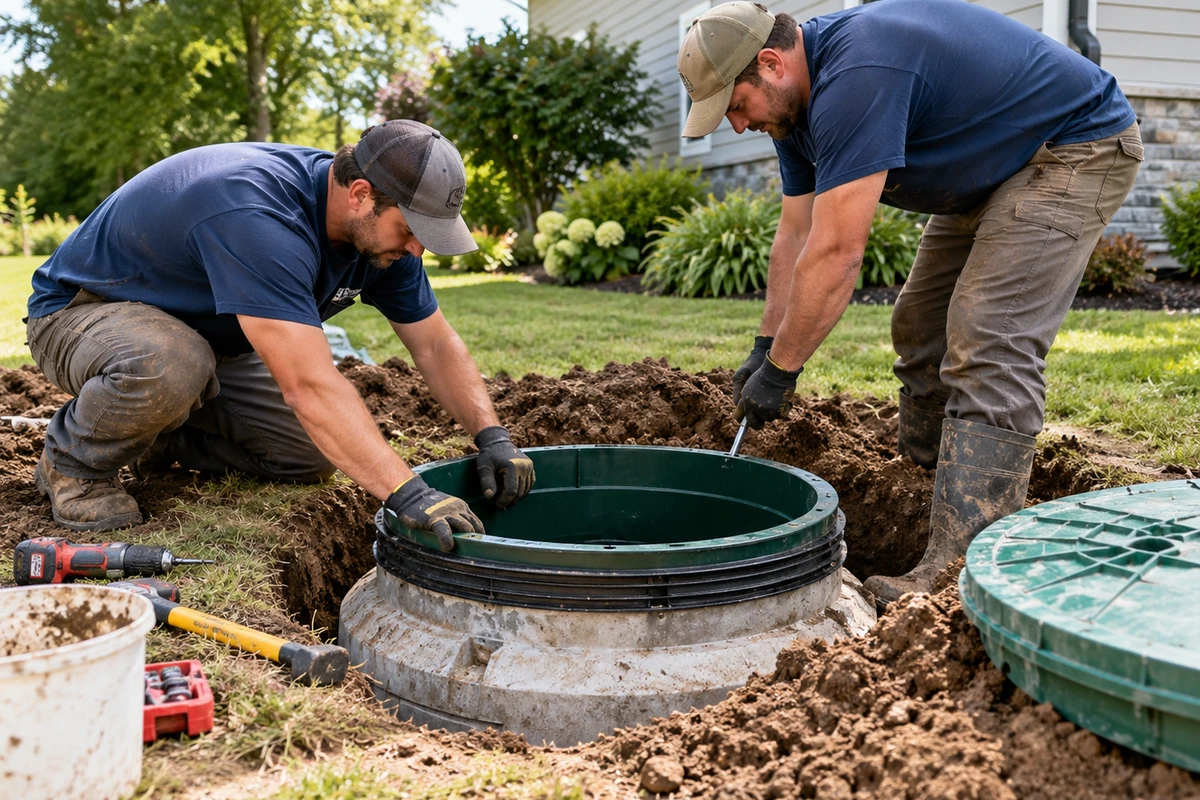
Required certified installation follows the permitted design. Excavation equipment, grading tools and safety equipment are used to place and connect components while protecting approved soil areas and nearby utilities.
6. Complete Inspection and Closeout
The local health department performs required inspection work before covered components are concealed. After approval, the site is backfilled and graded as included, and the final records should identify the installed layout and maintenance needs.
Who Approves a Septic System in Northern Kentucky?
Kentucky's onsite sewage program is administered through state and local health authorities. For Covington and Kenton County, the current Northern Kentucky Health Department septic information explains the local inspection and records pathway. An actively failing system should receive the appropriate site evaluation rather than being treated as a routine existing-system inspection.
Approval and installation are separate responsibilities. The health authority evaluates and inspects under the applicable program, while the installation must use the qualifications required by Kentucky. No contractor should be described as certified, permitted or authorized unless those details have been verified for the actual provider and project.
What Affects Septic Installation or Replacement Cost?
Cost depends on the approved system type, design flow, tank capacity, soil and site limitations, excavation depth, access, materials and restoration. A conventional gravity system on an accessible site has a different scope from a modified or alternative system requiring pumps, controls, engineered details or ongoing maintenance.
Other factors can include site evaluation, permit and inspection fees, design or engineering, utility conflicts, demolition or abandonment of old components, rock, groundwater, hauling, imported material, electrical work and final grading. A useful estimate separates these items and states exclusions. Publish a local range only when supported by current project-based quotes or completed jobs.
Related Installation and Septic Services
For work focused on the primary treatment vessel, see Septic Tank Replacement Covington.
For a failed soil-absorption area, see Drainfield Replacement Covington.
Routine tank emptying and maintenance are covered under Septic Tank Pumping Covington KY.
For broader questions about system care and service scope, visit Septic Service FAQs.
Installation and Replacement Areas Near Covington
Installation availability depends on the operating territory, project type, site access and applicable health authority. Coverage may include approved properties in Covington, South Covington, Independence, Taylor Mill, Ryland Heights, Morning View, Piner and Kenton, subject to confirmed service and project requirements.
Review Areas We Serve Near Covington for the current Covington, Kenton County and Northern Kentucky coverage area.
Frequently Asked Questions
Who approves a septic system in Northern Kentucky?
The Kentucky onsite sewage program is administered through state and local health authorities. Local health department inspectors perform site evaluations and required inspections. Installation must use the qualifications required by Kentucky, and the exact permit responsibilities should be confirmed for the property and project.
Can the drainfield be replaced without replacing the tank?
Sometimes. The tank may remain if its capacity, condition and configuration are acceptable, while a failed field may require separate repair or permitted replacement. Inspection findings and the approved design determine which components can stay.
What affects septic installation cost?
System type, site limitations, soil, design capacity, access, excavation, permits, engineering, materials and restoration all affect cost. Pumps, controls, electrical work, old-system abandonment and difficult groundwater or rock conditions may also change the scope. Use only current project-based ranges.
How much does septic system installation and replacement in Covington cost?
Cost depends on system size and type, access, depth, site and soil conditions, equipment, materials, permits and any additional design or restoration. A local range should be published only after current provider quotes or completed Northern Kentucky projects support it.
Where is septic system installation and replacement available?
Service is available only within the operating provider's confirmed territory and where the project type can be supported. The coverage hub lists approved communities near Covington and across parts of Kenton County and Northern Kentucky. Site access, permitting jurisdiction and scheduling can still affect availability.